modQPSK
Drag blocks. Watch signals. All in the browser.
LIVEqpsk_demo
β · roll-off0.35
EVM7.9%
WHAT'S NEW
Fresh in Potik
Newest blocks, high gain, low modesty.
 HeaderUI
UI
HeaderJun 18Added header.
Finally, a notch in Potik!If you open the lab - it has lab help and controls.
If you are in a freedive - it allows you to save your work or submit it as a lab
UI
Spotlight for blocksJun 11Add new blocks via global search - Ctrl+K | Cmd+K
Oh no you didn't...UI
ThemesJun 9Yeah, we have themes now. Light, dark, and a pysdr (white). Pick one in the settings menu.
Oh well, look at that...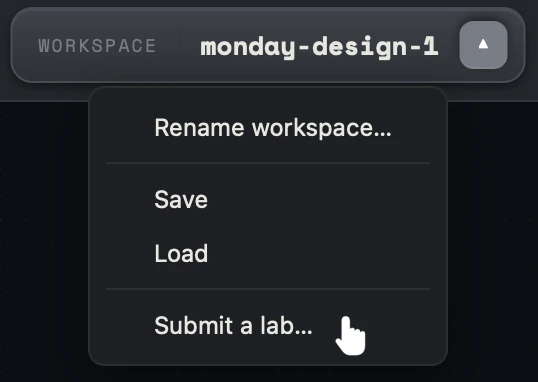 Lab AuthoringCommunity
Community
Lab AuthoringMay 29You can now submit your own lab with a click of a button. Pick the name, write few words, and PR will be created automatically. It will be published after review
Behold, the power of Lab Authoring awaits you!Community
Want to contribute? Here is GitHub!May 29GitHub is now open for community contributions — from new labs to bug reports.
potik-community on GitHubPlatform
Haters gonna hate, reporters gonna reportMay 14See something off? IQ-channel off? Nasty colors? The report button is waiting for you in the bottom-right corner. It even takes a screenshot for you, wow.
ReportUINEW
Dawn of Poti the CoachMay 10Meet Poti, your lab partner — Potik's friendly signal-critter coach who guides you hands-on through your first build, demonstrating how to drop blocks, wire them together, and turn the knobs, then handing you the cursor to try it yourself
Talk to PotiNEWKnobs EmphasisUI
UINEW
Knobs EmphasisApr 30Added an emphasis effect on the knobs to let the user know they need some touch! Works only the first visit.
Take a look (open in incognito)02 · WHAT IT DOES
Build it, run it, learn from it.
One canvas takes you from a blank graph to a running instrument you can share — the same engine that powers the editor and every embed.
BUILD
Wire the whole chain
Drag PRBS, FIR, mixers, channel models, CFAR and beamformers onto the canvas and connect them into a graph. Every block exposes its real parameters.
SIMULATE
It runs as you tune
Your graph compiles to a WebAssembly worker and runs live. Scopes, spectra, constellations, MSO, range-Doppler, range-angle and polar PPI update in real time.
LEARN
Read, fork, embed
Start from curated read-only labs, fork them, and rewire. Drop any lab into a lesson or post as an embed — the reader turns a knob and the math responds.
03 · FEATURED DEMOS
Built for the whole signal chain.
Worked examples ship with the editor — fork, retune, rewire. Every demo is one URL away from a runnable lab.
COMMS
BPSK in noise
awgn channel · live constellation · EVM
src → mod → awgn → sink
TIMING
Sampler & timing recovery
symbol clock · sample instants on the eye
src → sampler → ted → loop
RADAR
Range-Doppler GPU tracker
pulsed LFM · 64 pulses · 2 targets
src → mixer → mf → fft² in progress
SPECTRUM
Windowed FFT
hann · 4k bins · two-tone test
src → window → fft in progress
OFDM
OFDM subcarriers
64-FFT · 4 pilots · DC null
bits → qam → ifft → cp in progress
CONTROL
PID step response
Kp=2 · Ki=0.6 · Kd=0.18 · 18% OS
ref → pid → plant in progress